
Greenhouses and irrigation
We design, install and maintain irrigation and greenhouse systems for start-ups, cooperatives, estates and development programmes.
Good water control lets farmers plant outside the rainy season, get through dry spells and grow more on the same land.
- 43Climate-smart irrigation systems installed
- 35+Cooperatives in our network
Help with grant proposals. We help clients prepare irrigation-linked grant applications, for programmes such as YouthADAPT and the PNDP.
Systems we install
Each system is chosen for the crop, the water source and the size of the farm.
Drip irrigation
For perennial crops such as plantain, taking water to the root with little waste.
Overhead sprinklers
Sprinkler kits for short-cycle vegetables.
Gravity-fed tank systems
Low-cost systems that use a raised tank instead of a pump.
Greenhouse kits and tunnels
Greenhouse and tunnel structures, with irrigation lines and fertigation modules.
Hybrid irrigation for small plots
Combined systems with soil-moisture control for small, intensive plots.
Mobile water pumps
Pump installations, including solar pumps for off-grid sites.

How an installation runs
Consultation, design and installation, with training before we hand over.
Consultation and site survey
We talk through the crop, the land and the water source, and survey the site.
Design and layout
The system is laid out for the crop type and farm size, and priced.
Installation and training
We install the system, train the people who will run it and stay available for after-sales support.

In the field
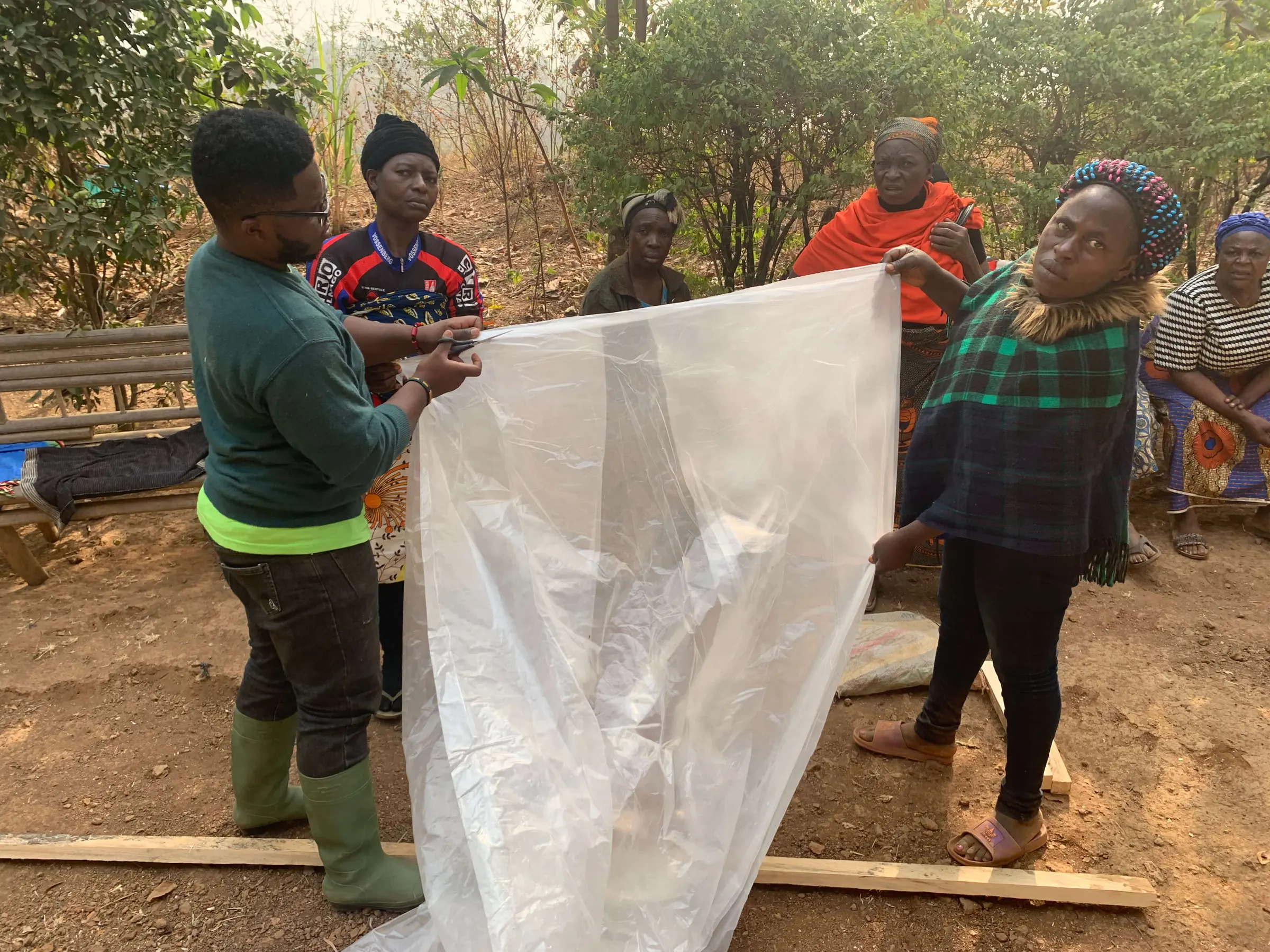
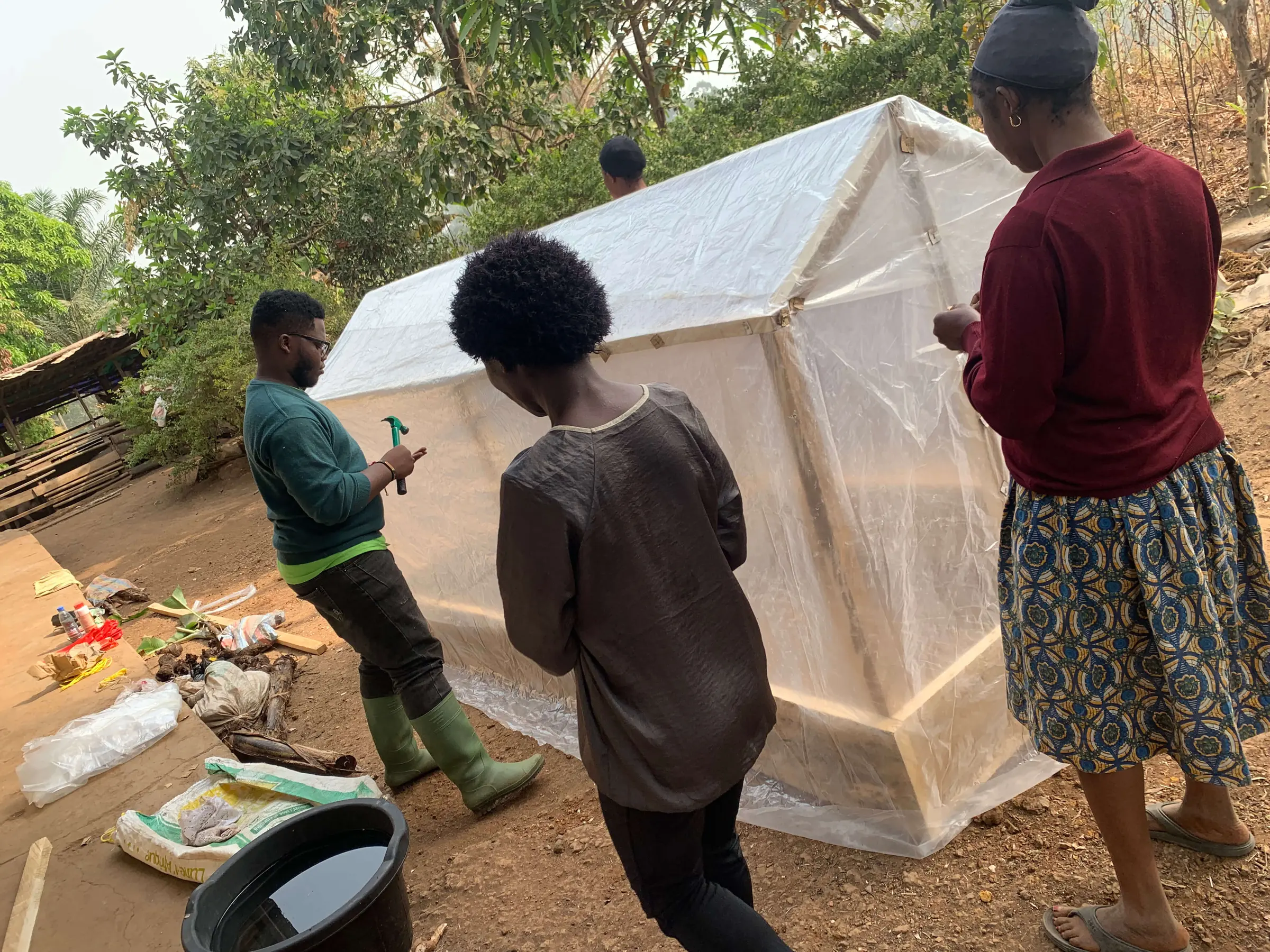
We build greenhouses with the farmers who will use them, so the people running the system have put it together themselves.
 Step one
The frame
Timber is measured, cut and strung into the greenhouse frame on site.
 Step two
The cover
Farmers stretch the plastic sheeting over the frame together.
 Step three
Ready to plant
The finished tunnel, sealed and ready for beds and drip lines.


Results
Every system is designed for its site, from a single greenhouse to plots shared by a cooperative.
Climate-smart irrigation in the network
We have installed climate-smart irrigation and greenhouse systems in communities across our cooperative network. Each is handed over with training, so the growers can run it through the dry season.

What the work shows
Tested in the field
Systems are field-tested and built to reduce water stress, for tropical farms that face erratic rain.
Packages for programmes
NGOs, ministries and cooperatives can take installation packages sized to the number of sites.
A longer growing calendar
Water control lets rural and peri-urban producers plant outside the rainy season.

Water where the root is
in the dry season too
Who it's for
Farms and start-ups
Commercial farms and new agribusinesses that want water they can count on.
Cooperatives
Smallholder groups sharing a water source across several plots.
NGOs and ministries
Programmes that need installation packages across many sites.
Quick answers
Is there a minimum farm size?
Irrigation installations start from one acre.
How do you choose between drip, sprinklers and a tank?
By the crop, the water source and the size of the farm. Our field engineers assess and map the site before recommending a system.
Who looks after the system afterwards?
We train your people on operation, filtration and maintenance, and our technicians can be deployed for upkeep.
Can you help us apply for funding?
Yes. We support irrigation-linked grant proposals, for programmes such as YouthADAPT and the PNDP.
Related services
Projects rarely need one service on its own. These are the ones most often combined with this one.
 Farms and estates
Farm setup and management
Land scouting, soil tests, farm layout and a crop calendar, then follow-up through the season.
See the service Farmers, staff, cooperatives
Training and capacity building
Workshops for farmer groups, processing staff and interns, in English, French or the local language.
See the service Where every project starts
Feasibility study
A site and market assessment before any money goes into planting, buildings or machines.
See the service


Grow under cover, water on time
Tell us the site, the crop and the area, and we will design the greenhouse or irrigation for it.


