
Farm setup and management
We plan and set up farms for governments, estate owners, agripreneurs and development agencies, then stay on through the season to help run them.
The work runs from choosing the land to finding buyers for the harvest.
- 580+Hectares of farmland managed for clients
- 35+Cooperatives in our network
Farmer groups included. Where a project works with smallholders, we organise the growers into groups and train them, so the farm has trained people on it from the first season.
What's included
What the service covers, from the first site visit to the market.
Land scouting, soil analysis and input planning
We visit candidate sites, test the soil and work out the seed, fertiliser and other inputs the crop plan needs.
Farm mapping and layout
A mapped plan of plots, paths, water points and storage, drawn for the crop and the size of the farm.
Crop calendar and pest and disease control
Planting, feeding and harvest dates for each crop, with a schedule for watching and treating pests and disease.
Farmer group formation and training
For projects with smallholders, we organise growers into groups and train them to farm to the plan.
Monitoring and reporting
Field visits and records through the season, written up for the client and for any funder behind the project.
Market linkage
We connect the farm with buyers before harvest, so the crop has somewhere to go.

How a project runs
Every farm project goes through the same three stages.
Feasibility study
We assess the land, water, energy and market, and give you a report and a quote for the work.
Design
We draw up the farm layout, crop calendar and input plan, and agree them with you.
Setup and follow-up
Our field officers set the farm up, then return through the season to monitor, advise and report.

In the field
The planning happens on the farm, with the people who will work it.
 Site visits
On the ground first
Our consultants walk the plots with the farmer before a plan is drawn.
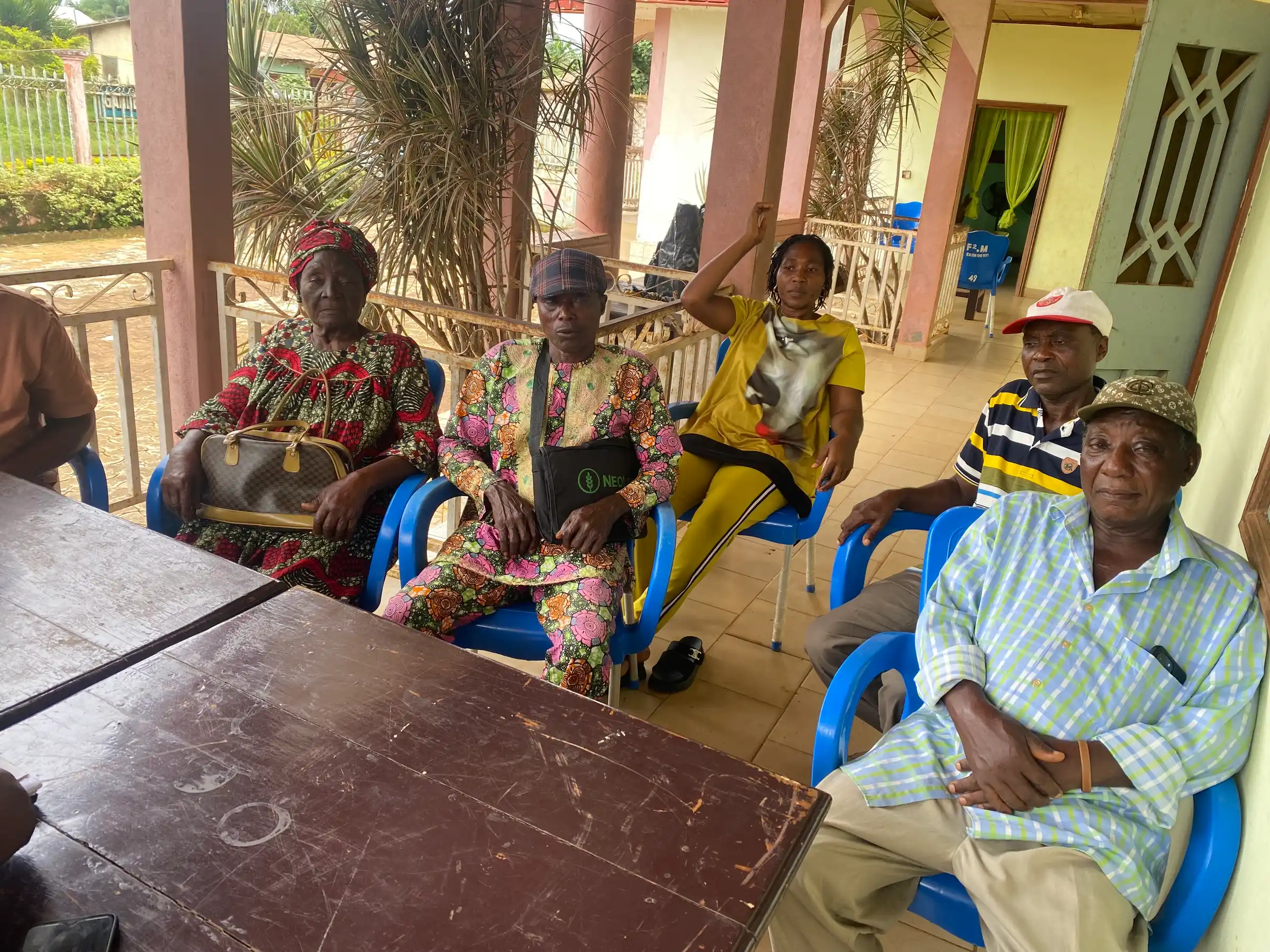 Farmer groups
Growers who sell together
Meetings with the growers come early, because the groups are built with them, not for them.
 Records
Numbers from the plot
Field staff log plots on their phones as well as in logbooks, so the figures reach the office.


Results
Farm management is where the consultancy began, in 2018, and it is still the largest part of it.
Farms run for large clients
Since 2018 we have managed farmland for large-scale clients, from input management to field mapping. Governments, NGOs and investors bring us in when they need a farm run efficiently and reported on openly.

What the work shows
Agronomists on every farm
Crops are monitored and guided by our in-house agronomists through the season.
Five regions
Our cooperative network covers the Southwest, Littoral, West, North and Centre regions of Cameroon.
Traceable from the plot
Harvests from the farms we manage can be traced from the plot to the market, which export buyers ask for.

From cleared land
to a farm that reports back
Who it's for
Government programmes
Ministries and councils running agricultural projects that need a team on the ground.
Development agencies
Donor-funded programmes that need farms set up, farmers trained and results reported.
Estate owners and agripreneurs
Landowners and new agribusinesses who want the farm planned and run properly from the start.
Quick answers
Where does a farm project start?
With a feasibility study. It looks at the land, soil, water and market, so the farm plan rests on what the site can actually do.
Can you take on a farm that is already running?
Yes. We assess projects at every stage, from an idea to a working farm, and plan from what is already there.
Do you supply seeds and planting material?
Yes: improved cassava cuttings, plantain and banana suckers, orange-flesh sweet potato vines, certified maize, bean and vegetable seed, and grafted fruit seedlings, from vetted sources.
How will I know how the farm is doing?
Through the project's monitoring records: what was planted, what inputs were used and what was harvested, collected in the field and reported back to you.
Related services
Projects rarely need one service on its own. These are the ones most often combined with this one.
 Water and climate
Greenhouses and irrigation
Drip, sprinkler and gravity-fed systems, greenhouse kits and tunnels, designed for the site and kept running.
See the service Farmers, staff, cooperatives
Training and capacity building
Workshops for farmer groups, processing staff and interns, in English, French or the local language.
See the service Where every project starts
Feasibility study
A site and market assessment before any money goes into planting, buildings or machines.
See the service


Plan your farm with us
Tell us about the land and the crop, and we will say what setting it up and running it would take.


